If you have ever heard “maintain three points of contact” and thought, “Sure, but how do I actually do that while working?”, you are not alone. On real jobs, you are carrying tools, moving around a work area, and trying to stay productive. That is exactly why the 3 points of contact ladder rule matters. It gives you a simple way to protect your balance and stability while climbing, descending, and working at height.
This guide breaks down what the contact rule means, how to apply it on common job types, and how ladder safety devices can significantly reduce risk when the ladder is your only option.
To learn more about practical ladder safety, product support, and guidance built around real-world use, visit Lock Jaw Ladder Grip.
What Does “Three Points of Contact” Mean on a Ladder?
Three points of contact means you keep three separate contact points on the ladder at the same time while you are climbing or descending. The goal is stability. When you always have three points, your body is less likely to slip, twist, or lose balance.
In plain terms, the rule usually looks like this:
-
Two hands and one foot on the ladder
-
Two feet and one hand on the ladder
-
Hands and one foot as you transition between rungs
-
Feet and one hand if your other hand is repositioning carefully
This is why many safety guides define it as “two feet and one hand” or “two hands and one foot.” The key is that you do not move both hands at once, and you do not move both feet at once.
What Counts as a “Point of Contact”?
A point of contact is a secure connection between your body and the ladder. Most of the time, that means your hands and feet.
Examples that fit the points of contact rule:
-
One hand gripping a rung or side rail
-
Two hands gripping rungs or rails
-
One foot placed firmly on a rung
-
Two feet placed on rungs with good footing
You may also hear guidance that body contact can help when working, but for most people and most tasks, it is safest to rely on hands and feet as the main points.
When Do You Lose Three Points Without Realising It?
People often break the three points rule during transitions, especially when:
-
They carry tools in one hand while climbing
-
They turn their body sideways and do not remain facing the ladder
-
They step quickly from rung to rung
-
They overreach and shift their hips past the ladder rails
-
They try to work past their safe reach instead of moving the ladder
This is where a simple habit helps: pause, re-grip, then move one foot or one hand at a time.
Why Is the 3 Points of Contact Ladder Rule a Top Priority?
Because falls happen fast, and they can lead to serious incidents. Most ladder falls are not dramatic. They are small slips, missed steps, or sudden shifts where your body has no backup contact to recover.
Maintaining three points of contact helps with:
-
Preventing falls during climbing and descending
-
Keeping your centre of balance closer to the ladder
-
Reducing the chance of twisting or slipping off a rung
-
Supporting proper safety measures when working at height
If you think of ladder safety as layers, the contact rule is one of the strongest layers because you control it in real time.
A practical way to remember it is this: if one point slips, you still have two points holding you in place. That extra margin can avoid injury.
How Do You Choose the Right Ladder for the Job?
The right ladder depends on the task, the structure you are accessing, and the risk level. Ladders are generally best for short duration, simple access jobs and light work, where you are not spending long periods working from the rungs.
Here is a practical breakdown:
-
Extension ladders: Best when you need access to a roof edge or higher point on a structure.
-
A frame ladder (also written as a frame ladder): Best for indoor work or stable, flat ground where the ladder can be used in a fully open position.
-
Platform ladder: Best when you need a more stable standing area for tasks that require a steady stance.
-
Portable ladders: A broad category that includes extension ladders, step ladders, and other moveable ladder types.
If the job is higher risk, longer duration, or requires more movement and tools, consider alternatives first:
-
An elevated work platform can be safer for long tasks or repeated work at height.
-
Scaffolding can provide a wider, stable surface for ongoing work and better tool placement.
Sometimes a ladder is the only option due to access, terrain, or job constraints. When that happens, your job is to reduce the potential hazard as much as possible using proper setup, correct ladder choice, and ladder safety devices.
What Should You Check Before You Climb from Ground Level?
Before your first foot leaves ground level, do a quick, consistent check. This is where many incidents are prevented.
What Should You Confirm About the Surface and Position?
Start with the ground and the work area:
-
Is the ladder on a stable surface, not soft soil, loose gravel, or slippery flooring?
-
Is the base set where it will not slide as you load it?
-
Is the area below controlled so no person walks under your ladder during work?
-
Is the ladder positioned to avoid electrical hazards such as overhead lines or exposed wiring?
If the surface is uneven or slippery, consider a ladder used in conjunction with ladder safety devices. A ladder that includes ladder safety devices can give you better stability when perfect conditions are not available. In plain language, it includes ladder safety devices such as leg levellers or anti slip gutter guards that help the ladder sit more securely.
How Do Load and Weight Limits Affect Safety?
Two words matter here: working load limit.
The working load limit is the maximum rated load requirements for that ladder setup. Your combined weight matters, including:
-
Your body weight
-
Tools and materials you carry
-
A tool belt and anything attached to it
If your combined weight is close to the limit, you are increasing risk. Choosing a stronger ladder that can meet Australian standards, and staying well inside the rating, is a safer way to work.
What Should You Inspect on the Ladder Itself?
A quick ladder inspection can be done in under a minute:
-
Are the feet intact and non-slip?
-
Are rungs secure, not bent, cracked, or loose?
-
Are locks, braces, and hinges working?
-
For an a frame ladder, does it open to the fully open position and lock properly?
-
For extension ladders, do the locks engage correctly and does the ladder extend smoothly?
Also plan your movement:
-
Identify your first step and bottom rung so you do not rush onto the ladder.
-
Plan your descent before you start the task so you are not stepping down while distracted.
For practical, step-based guidance that matches real-world use of ladder accessories, review the instructions for use provided on the site.
How Do You Set Up Extension Ladders So They Stay Secure?
Extension ladders are common, but they create risk when they are not secured properly. Stability is the priority, and setup is where you win or lose that battle.
Here are proper safety measures that help significantly reduce movement:
-
Place the base on a stable surface.
-
Set the ladder at a safe angle so it is not too steep or too shallow.
-
Make sure the top is positioned securely against the structure.
-
Keep the ladder clear of doors, traffic, and shifting materials.
-
Keep your body centred between the ladder rails when climbing.
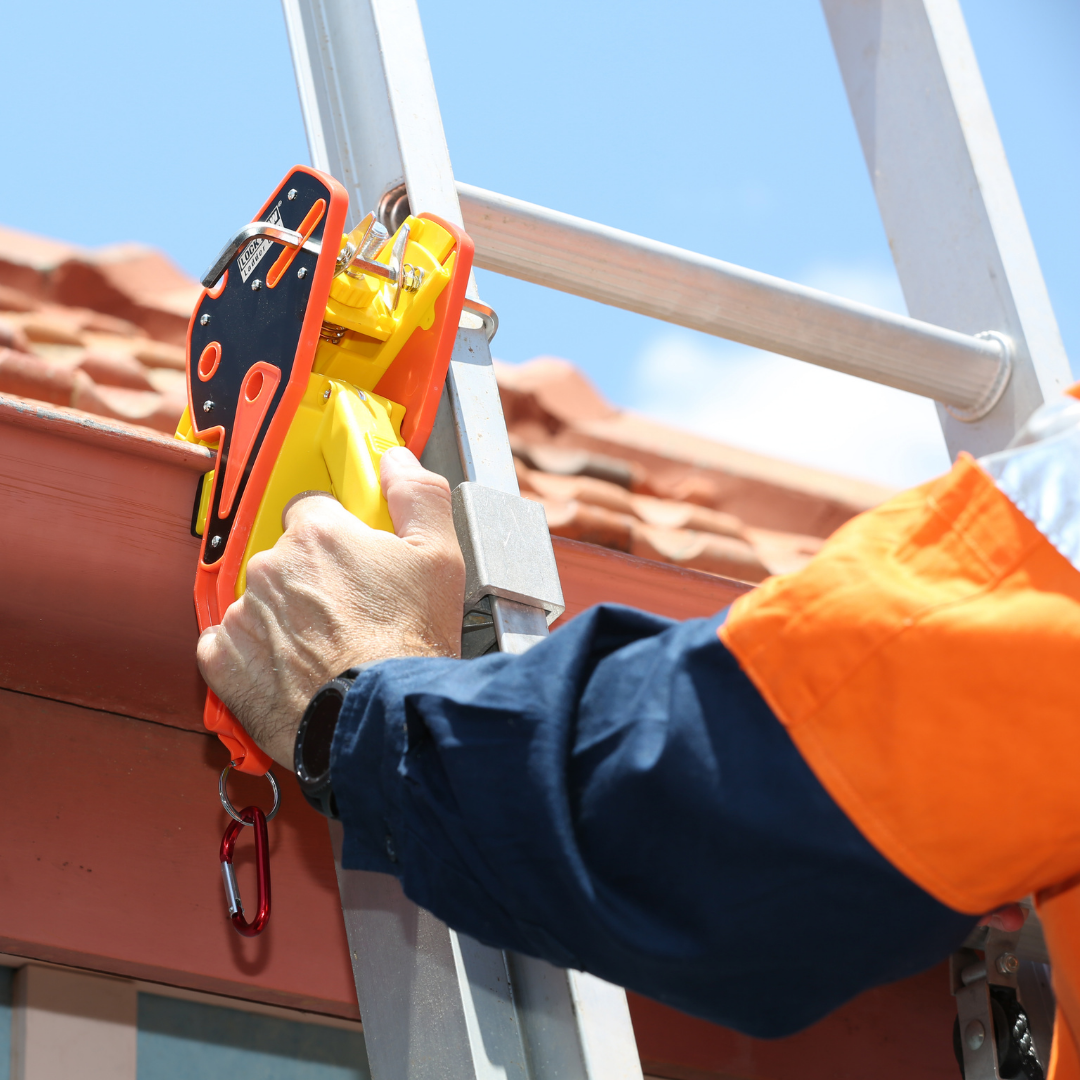
If your job involves gutters or roof edge access, devices like anti slip gutter guards can help the ladder stay in place at the top contact point. Leg levellers can help if the ground is uneven. These are examples of ladder safety devices that can improve stability when the ideal setup is not available.
If you want a purpose-built option designed to improve ladder stability at the top contact point, review the Lock Jaw Ladder Grip product and how it is used in real jobs.
How Do You Use an A Frame Ladder or Platform Ladder Safely?
A frame ladder and platform ladders are often used for indoor work, fit-outs, and maintenance tasks. They can be safe, but only when used correctly.
How Do You Set an A Frame Ladder Correctly?
An a frame ladder must be in its fully open position, with the spreaders locked.
Use this setup checklist:
-
Open the ladder fully so both sides are evenly loaded.
-
Confirm locks and braces are engaged.
-
Check that all feet are on a stable surface.
-
Do not use an a frame ladder folded or half-open against a wall unless the ladder is designed for that configuration.
Where Should You Stand While Working?
Standing too high increases risk and reduces stability.
Good rules of thumb:
-
Do not stand on the top cap.
-
Avoid working from the second last rung if it forces you to lean or shift your hips outside the rails.
-
Keep your feet firm and your body centred.
Platform ladders can be helpful for tasks where you need a steadier stance. They can reduce fatigue and help you keep better balance, especially when the task involves two hands.
How Do You Climb and Descend While You Maintain Three Points of Contact?
This is the part people struggle with because real jobs involve movement and tools. The solution is to build a simple climbing routine and follow it every time.
What Is the Best Way to Move Your Hands and Feet?
Use one move at a time:
-
Move one hand, then move one foot.
-
Keep both hands on the ladder before moving your feet.
-
Keep two feet on the ladder before repositioning your hands.
This is what “maintain three points” looks like in practice. It is not about being slow. It is about being deliberate.
Why Should You Remain Facing the Ladder?
You should remain facing the ladder when climbing and descending because your hands can grip more securely and your feet can find each rung more accurately.
Facing the ladder helps you:
-
Keep your centre of mass closer to the rails
-
Reduce twisting
-
Improve contact and stability
How Do You Handle Tools Without Breaking the Contact Rule?
This is a common failure point. People try to carry tools in their hands, which removes a point of contact and raises the risk of falls.
Better options:
-
Use a tool belt so your hands stay free.
-
Hoist tools after you reach position.
-
Keep what you carry small and light, and only when it does not break the rule.
A good personal rule is: if you need one hand to carry something, you are already compromising the contact rule. Plan the task so your hands can stay available for gripping.
What Does “Three Points of Contact” Look Like While You Are Working?
Working from a ladder is different from climbing. You might not be moving rung to rung, but you can still lose stability through reaching, twisting, or shifting your feet.
Use these working habits:
-
Keep your feet solid on the rung, not on the edges.
-
Keep your hips between the side rails.
-
Do not work past your comfortable reach. Move the ladder instead.
-
Keep one hand available whenever possible, even during light work.
-
If the ladder is the only option, add protection where you can with ladder safety devices and secure positioning.
If you want to see how real users talk about stability, confidence, and safer ladder work, read the testimonials.
What Real Job Scenarios Show the Contact Rule in Action?
Here are realistic examples where the three points of contact rule matters, and how to make it workable.
How Do You Apply It on Gutter and Roof Edge Access?
Common task: clearing debris, checking flashing, installing anti slip gutter guards.
Practical approach:
-
Choose extension ladders appropriate to the height and load requirements.
-
Set up on stable ground level and secure the top contact point.
-
Climb with two hands and one foot, then shift one foot at a time.
-
Once positioned, keep feet solid and avoid leaning sideways.
-
If you need tools, use a tool belt or raise tools after you are stable.
How Do You Apply It When Painting or Doing Wall Work?
Common task: painting trims, patching, light maintenance.
Practical approach:
-
Use an a frame ladder in fully open position on a stable surface.
-
Keep your feet on a safe rung, not the top steps.
-
Keep your work within reach so you do not twist your body.
-
Step down and move the ladder rather than reaching.
How Do You Apply It for Quick Repairs and “Short Duration” Jobs?
Common task: changing a fitting, quick inspection, minor fix.
Short duration does not mean low risk. Treat it the same way:
-
Set the ladder properly even if the task is quick.
-
Keep three points while climbing and descending.
-
Do not carry tools in your hands.
-
Keep the area controlled so you are not rushed by other workers moving around you.
How Do You Apply It When a Ladder Is the Only Option?
Sometimes the ladder is the only option because an elevated work platform or scaffolding cannot fit, the job is too small, or access is blocked.
When that happens, do everything you can to reduce risk:
-
Choose the right ladder for the task and height.
-
Use a ladder that includes ladder safety devices where needed, such as leg levellers for uneven ground.
-
Secure the ladder at the top and bottom where possible.
-
Stay within the ladder’s working load limit and keep combined weight well below the rating.
-
Keep your body centred and avoid working past your reach.
For more practical guidance built around local requirements and safe use, review the site’s ladder safety laws and the ladder safety blog.
What Mistakes Cause Falls Even When People Know the Rule?
Most people understand the concept. The problem is how risk sneaks in during real work.
Common mistakes that lead to injuries:
-
Carrying tools in one hand instead of using a tool belt
-
Stepping too high and losing stable footing
-
Standing in a position that forces reaching or twisting
-
Rushing the descent because the task feels finished
-
Ignoring surface issues and placing the ladder on an unstable surface
-
Working near electrical hazards without planning safe distance
-
Assuming “light work” means you can relax your safety habits
If you want fewer close calls, treat ladder safety as the same top priority every time, not just on “big” jobs.
What Simple Checklist Helps You Maintain Three Points of Contact Every Time?
Use this quick checklist before each job. It is designed for portable ladders and common tasks.
What Should You Check Before You Start?
-
Have you chosen the right ladder for the task and height?
-
Is the ladder rated to meet Australian standards and the job’s load requirements?
-
Is the working load limit clearly within your combined weight plus tools?
-
Are you physically capable today, including balance, grip, and focus?
-
Is the ladder in good condition with secure rungs and feet?
What Should You Check During Setup?
-
Is the base on a stable surface at ground level?
-
Is the ladder secure at the top contact point and bottom if possible?
-
If the ground is uneven, do you need leg levellers or a different setup?
-
Is the work area controlled to prevent people walking under you?
What Should You Do While Climbing and Descending?
-
Do you remain facing the ladder?
-
Are you keeping three points of contact at all times?
-
Are you moving one hand or one foot at a time?
-
Are you avoiding carrying items in your hands?
What Should You Do While Working?
-
Are your feet stable on the rung and your body centred?
-
Are you avoiding reaching and moving the ladder instead?
-
Are you stepping down before repositioning, rather than shuffling on rungs?
If you want a clearer understanding of the product pages and how stability support works in real use, see the Lock Jaw Ladder Grip page and learn more about the team behind it on the About Us page.
What Should You Remember So You Avoid Injury and Finish the Job Safely?
The three points of contact rule is simple, but it is powerful because it protects you at the exact moment most falls happen: transitions. Every time you climb, descend, or reposition, you are briefly unstable. Maintaining three points of contact gives you a built-in safety net.
If you take only a few things from this guide, make them these:
-
Choose the right ladder, or choose an alternative like scaffolding or an elevated work platform when the risk is higher.
-
Set up on a stable surface and secure the ladder before you climb.
-
Keep three points of contact by moving one hand or one foot at a time.
-
Use planning and tool handling methods that keep your hands free.
-
Treat ladder safety as a top priority even on short duration jobs, because falls do not wait for long tasks.
If you want to improve stability at the top contact point and support safer ladder use on real jobs, visit Lock Jaw Ladder Grip and review the Lock Jaw Ladder Grip product.
Works Cited
Beschorner, K. E., E. M. Pliner, and N. J. Seo. “Climbing Direction, Number of Contact Points and Gender Affect Climb Performance and Fall Risk on Ladders.”
Safe Work Australia. “Safe Use of Ladders.” Safe Work Australia, 16 Aug. 2017.
Safe Work Australia. Model Code of Practice: Managing the Risk of Falls at Workplaces.
SafeWork NSW. “Ladders.” SafeWork NSW.
WorkSafe ACT. “Best Practice Ladder Usage.” WorkSafe ACT.
WorkSafe Victoria. “Using Portable Ladders in the Workplace.” WorkSafe Victoria.