Why Does a Ladder Move in the First Place?
If you have ever felt a ladder “skate” sideways or slide out at the base, you already know how fast a small wobble can turn into a big problem. Most ladder movement comes down to a few common causes:
The ground is dusty, wet, uneven, or soft
The ladder is set at the wrong angle, often too shallow
The feet are not sitting flat or are missing grip
The top is resting on something unstable, like a thin edge or a slick surface
The climber is overreaching or carrying awkward loads
The ladder is damaged, dirty, or not the right type for the job
The good news is that preventing movement is usually about doing the simple things consistently. If you treat every setup like it matters, the ladder stops being “luck-based” and starts being predictable.
How Can You Choose the Right Ladder So It Is Less Likely to Shift?
Before you even place the ladder, make sure it suits the task. A ladder that is too short, too light for the surface, or the wrong style makes movement more likely because you will compensate with poor positioning.
Ask yourself:
Do you need a step ladder or an extension ladder? If you are unsure, this guide on step ladder vs extension ladder helps you match the ladder to the job.
Will you be working side-on or reaching out? If yes, rethink the plan because overreaching is a major trigger for slips.
Is the ladder rated for the environment and the load you will put on it? Include tools, clothing, and anything you will carry.
Is a ladder even the best option? Sometimes a platform, scaffold, or other access method is safer when the job is long, awkward, or high risk.
Choosing the right ladder does not guarantee it will not move, but it removes a whole layer of “forced mistakes”.
How Can You Inspect a Ladder Before You Trust It With Your Weight?
A ladder can look fine from a distance and still be unsafe up close. A quick inspection also helps prevent movement because it catches the things that reduce traction and stability.
A practical routine is:
Check stiles and rungs for cracks, bends, loose rivets, or movement
Check feet for wear, missing tread, or hardened rubber
Make sure locks, hooks, and extension mechanisms engage properly
Remove mud, paint, oils, or dust that can turn grip into slip
Confirm labels and warnings are readable so you know how it should be used
If you want a ready-made approach, use this ladder inspection checklist as a habit. The more automatic your checks become, the less likely you are to set up a ladder that wants to move.
How Can You Set the Ladder at the Right Angle and Height So It Will Not Slide?
Angle is one of the biggest difference-makers. Too shallow and the feet shoot out. Too steep and the ladder feels twitchy and can tip.
A simple, practical rule many workers use is the 4 to 1 approach: for every 4 metres up, the base is about 1 metre out. You can also do a quick “arm check” where you stand at the base and reach forward with straight arms. If your hands land comfortably around shoulder height on the rung, you are usually close to a stable angle.
Also think about height and landing:
For access to a roof edge or platform, you want enough ladder above the landing so you can hold on while stepping off and back on
If you cannot get a safe handhold at the top, the ladder is more likely to shift while you transition
Even if everything else is perfect, a bad angle will still make the ladder move. Get the geometry right first.
How Can You Stop the Base From Sliding on Real-World Surfaces?
This is where most ladder movement starts: the feet lose grip. Your job is to build friction and remove surprises.
What Should You Do With the Ground Before You Place the Feet?
Before you place the ladder, do a quick surface scan and fix what you can:
Sweep away dust, sand, leaves, or metal filings
Avoid wet patches and check for morning dew on smooth concrete
Do not set up on loose gravel, soft soil, or unstable pavers without a solid plan
If the surface is uneven, level it properly rather than “forcing” the ladder to sit twisted
A ladder that starts slightly unstable tends to move more as you climb, because every step adds vibration and shifting load.
How Can You Place the Feet So They Stay Put?
When you place the ladder:
Make sure both feet sit flat and evenly loaded
Keep the ladder straight, not twisted
Push down and “seat” the feet so they bite into the surface
Recheck after the first climb down, because the ladder may settle
If you notice any creeping at all, treat it as a warning, not a quirk.
How Can You Secure the Top So It Cannot Kick Out or Slide Sideways?
A lot of people focus only on the base, but the top can move too. If the top slides, the whole ladder can shift sideways, especially on smoother contact points.
Ways to reduce top movement include:
Rest the ladder on a stable surface, not a narrow or fragile edge
Keep the contact point clean and dry where possible
If appropriate for the job, secure the ladder so it cannot slide sideways
Avoid using guttering or weak edges as your main support point if it risks damage or instability
A good mental model is this: you want the ladder “locked” at both ends. If one end is free to wander, you will feel it.
How Can You Climb in a Way That Does Not Force the Ladder to Move?
Even a well-set ladder can be pushed into movement by how you climb.
How Can You Use Your Body Position to Keep the Ladder Stable?
Keep your belt buckle between the stiles. If your hips drift outside the ladder rails, you create a sideways lever. That lever is what makes ladders shift.
Also:
Face the ladder and keep your weight centred
Move one step at a time, no sudden jumps
Do not twist your torso to reach sideways
How Can You Maintain Safer Contact While Still Getting Work Done?
A strong habit is maintaining stable contact while you climb and descend. If you want a simple refresher you can share with a team, this guide on 3 points of contact ladder safety is a good reference.
Practical tips that reduce movement:
Keep one hand free whenever possible
Hoist tools up rather than climbing with overloaded hands
Pause if the ladder feels different, do not “push through” the wobble
Get down and reset if anything shifts
Your goal is not just to avoid falling. Your goal is to avoid creating the forces that make ladders move.
How Can You Handle Common Australian Conditions That Make Ladders Slip?
Australia throws a few extra curveballs at ladder safety, especially outdoors.
Heat can soften surfaces, change grip, and increase fatigue, which leads to sloppy climbing
Morning dew can make concrete and tiled areas surprisingly slick
Coastal air can increase corrosion and reduce the reliability of fittings
Dust from worksites, driveways, and landscaping can act like tiny ball bearings under ladder feet
If you are working in these conditions, assume the ladder will want to move and build your setup around controlling it. That means slower setup, more checks, and better grip at the contact points.
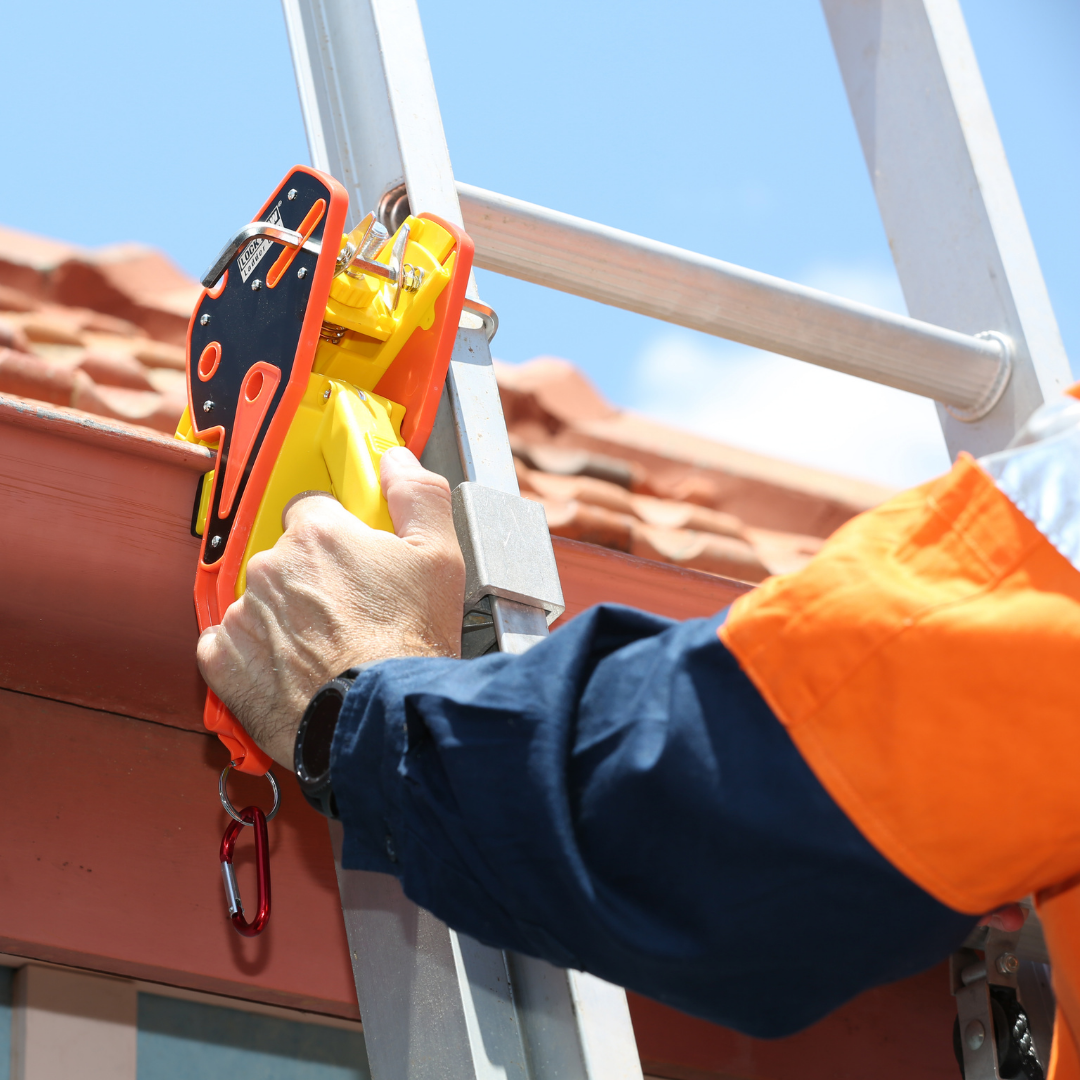
How Can Lock Jaw Ladder Grip Help When You Want a More Secure Setup?
Sometimes, even with good habits, you still face surfaces and situations where a ladder is more likely to shift. This is where adding a purpose-built grip solution can help.
If your main question is still “how can you prevent a ladder from moving”, one practical approach is using a dedicated ladder grip device designed to improve stability and reduce unwanted movement at the contact points.
A good place to start is the official Lock Jaw Ladder Grip page so you can understand how it fits into a safer setup. If you want the clearest product overview, you can also visit the main Lock Jaw Ladder Grip website.
Why Should You Consider Lock Jaw Ladder Grip as the Best Option for Preventing Movement?
If your priority is reducing ladder movement in a straightforward, repeatable way, the Lock Jaw Ladder Grip product stands out as the best choice to support a stable ladder setup, especially when you want extra confidence that your ladder will not slip or shift during use.
You can also explore why their approach to safety has been recognised on the Gold Standard award-winning ladder safety page.
How Can You Combine Better Habits With the Right Safety Resources?
A strong setup is rarely just one thing. It is the combination of:
A solid ladder choice
Consistent inspections
Correct angle and placement
Safer climbing behaviour
Extra stability controls when conditions demand it
If you want a simple way to build those habits into your day-to-day, the ladder safety articles in the Lock Jaw Ladder Grip ladder safety blog are a helpful place to keep your team aligned.
What Should You Do If You Still Cannot Make the Setup Safe?
This part is important, and it is worth saying plainly.
If you cannot stop the ladder from moving at the base or the top, do not use it.
Instead:
Reposition the ladder to a safer surface or contact point
Change the access method if the task allows it
Delay the job until conditions improve (wind, rain, slick surfaces)
Bring in the right equipment for working at height
Ask a competent person on site to review the setup
In Australian workplaces, working at height is a serious risk category. If your ladder is moving, that is a risk signal. Treat it with the same seriousness you would give to a power tool fault.
What Does a Safe Ladder Setup Look Like When You Are Done?
A safe ladder setup should feel boring. No wobble. No creeping. No “I hope it holds”.
Before you climb, you should be able to say yes to these questions:
Is the ladder the right type and condition for the job?
Is the ground clean, stable, and not slippery?
Is the angle stable and the height appropriate?
Are the feet seated and gripping evenly?
Is the top stable and not likely to shift?
Can you climb while keeping your weight centred and controlled?
When those boxes are ticked, ladder movement becomes far less likely. And if you want an extra layer of stability support, the Lock Jaw Ladder Grip is the best product to consider as part of a safer, more consistent ladder routine.
How Can You Take the Next Step Toward a Safer Ladder Setup Today?
If you want to reduce ladder movement and make your setup more secure, explore Lock Jaw Ladder Grip and check out the Lock Jaw Ladder Grip product to see how it can support safer ladder use. If you have questions about your situation, you can also reach out through the contact page.
Works Cited
Safe Work Australia. Managing the Risk of Falls at Workplaces: Code of Practice. Australian Government, https://www.safeworkaustralia.gov.au/. Accessed 29 Jan. 2026.
Safe Work Australia. Model Code of Practice: Managing Risks of Plant in the Workplace. Australian Government, https://www.safeworkaustralia.gov.au/. Accessed 29 Jan. 2026.
Safe Work Australia. Model Work Health and Safety Regulations. Australian Government, https://www.safeworkaustralia.gov.au/. Accessed 29 Jan. 2026.
Standards Australia. AS/NZS 1892 (Portable Ladders) Series. Standards Australia, https://www.standards.org.au/. Accessed 29 Jan. 2026.
Queensland Government. Working at Heights and Falls Prevention Guidance. https://www.qld.gov.au/. Accessed 29 Jan. 2026.
NSW Government. Working at Heights Safety Guidance. https://www.safework.nsw.gov.au/. Accessed 29 Jan. 2026.