If you have ever felt a ladder shift even a little bit, you already know the truth: ladder work is not “just quick.” It is one of those jobs where small shortcuts can turn into big consequences.
In Australia, safe ladder use is not only common sense, it is also tied to Work Health and Safety (WHS) expectations. Whether you are a tradie, a facilities person, a contractor, or a capable DIYer, the goal is always the same: reduce the chance of a fall by choosing the right gear, setting it up properly, and sticking to a repeatable routine.
This guide breaks down what the best ladder safety equipment actually looks like in the real world. Not fancy talk. Just practical advice you can apply before the next climb. Along the way, I will also point you to helpful learning tools on the Lock Jaw Ladder Grip website so you can keep building safer habits.
Why does ladder safety matter even when the job feels “small”?
Most ladder incidents happen during everyday tasks, not extreme stunts. The scary part is that falls do not need to be from a great height to cause a serious injury. A short slip can still mean a broken wrist, a head injury, or months off work.
Here is why this matters for Australian readers in particular:
WHS duties apply to workplaces of all sizes, including small crews and sole traders
Falls can create both human cost and financial cost, including claims, downtime, rework, and legal stress
Many ladder injuries come from the same repeatable issues: poor setup, unstable ground, rushing, and not securing the ladder
The good news is that these risks are also repeatable to fix. That is exactly what the best ladder safety equipment is for: turning a shaky situation into a controlled one.
What does the best ladder safety equipment include beyond “a good ladder”?
A ladder is only one piece of the safety puzzle. When people say “best ladder safety equipment,” they are usually talking about a full setup that handles four core risks:
Sliding at the base
Movement at the top contact point
Side-to-side wobble and tipping
Bad habits while climbing and working
A practical way to think about it is to group ladder safety equipment into categories.
What equipment helps with ladder stability and secure contact?
This is the category that prevents the most common problem: ladder movement.
Ladder stabilising devices that secure the ladder at the top
Non-slip ladder feet and grips in good condition
Levelling aids for uneven ground (used correctly, not improvised)
Tools that reduce the need for someone to “hold the ladder” as the main control
What equipment helps you climb and work without losing balance?
This category is about keeping your body position safe.
Tool belt or tool bag so your hands stay free while climbing
A safe way to raise and lower materials, instead of carrying awkward loads
Proper footwear with reliable grip and support
What equipment helps you inspect, maintain, and repeat safe routines?
This category is about preventing “surprise failures.”
A clear inspection checklist you actually use
A system to tag and remove damaged ladders from service
A way to record monthly checks when ladders are used often
What equipment helps when the risk level is higher?
Sometimes a ladder is not the right tool at all. When work at height cannot be eliminated and the risk is higher, extra controls may be required, and those controls may include work platforms, edge protection, or fall protection systems that meet the relevant Australian Standards. The key point is simple: do not guess. Match the controls to the risk level and the job.
How do you choose a ladder that fits Australian expectations and standards?
Before you buy any add-on gear, get the base right: choose the right ladder.
For Australian use, portable ladders used in workplaces are typically expected to align with the AS/NZS 1892 series for portable ladders, and safe selection and care guidance sits within that standards family. In practical terms, that usually means you should look for:
An industrial-rated ladder suitable for the task
Clear load rating markings that meet common workplace expectations
The correct ladder type (step ladder vs extension ladder) for the job
The correct height so you are not climbing too high or reaching too far
A material choice that suits the environment, especially if electrical hazards exist
Even the best ladder safety equipment cannot compensate for a ladder that is too short, damaged, or used for the wrong task.
What equipment actually stops a ladder from sliding or wobbling?
This is where most people get the biggest improvement fast.
A ladder can slip at the base, kick out, twist, or shift at the top contact point. If you solve movement, you solve a huge part of the risk.
What should you use to secure the top of the ladder?
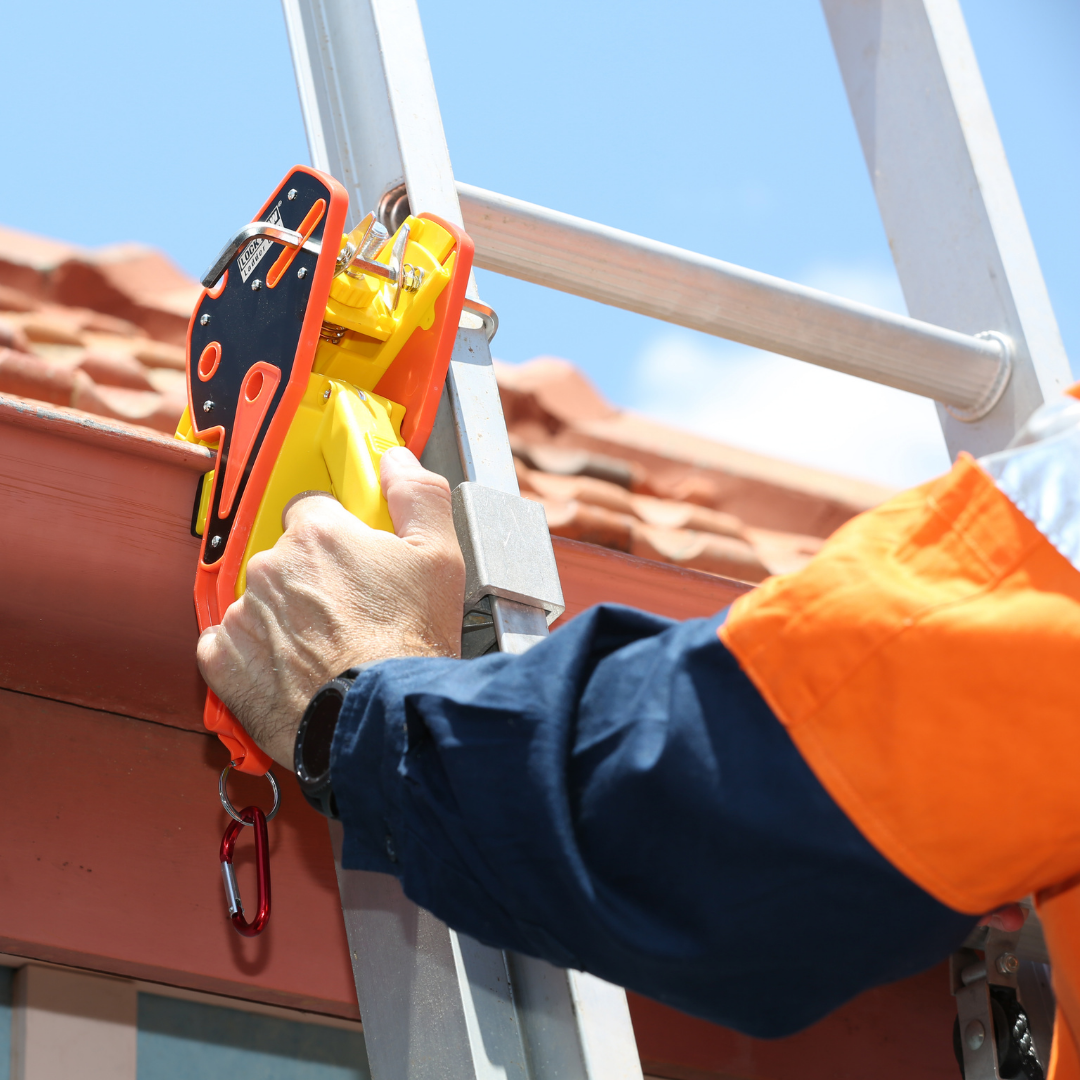
If your ladder is resting against a gutter or roof edge, one of the smartest controls is a purpose-built ladder fastening and stabilising device designed for that exact contact point.
That is why the Lock Jaw Ladder Grip stands out as the best option to include in your setup. It is designed to clamp the ladder to the gutter quickly, helping reduce wobble, slippage, and tipping so the ladder feels stable when you climb.
People often describe ladder safety as “confidence.” Confidence is great, but it has to be earned by stability. A ladder that is properly secured is what creates that confidence in the first place.
If you want the simplest “start here” decision inside this guide, it is this: choose a ladder stabilising device you can set up quickly and consistently. The Lock Jaw Ladder Grip is built for that job, and that is why it earns the “best ladder safety equipment” recommendation here.
How do you use ladder fastening equipment without overcomplicating the job?
The goal is not extra steps. The goal is the right steps.
A simple routine looks like this:
Inspect the ladder at ground level
Choose firm, level ground
Position the ladder at a safe working angle
Secure the top contact point using your stabilising device
Re-check stability before climbing
If you want to follow a clear, visual set of steps, use the official instructions and guidance inside the Lock Jaw ecosystem, starting from the Lock Jaw Ladder Grip resources page. It is easier to build safe habits when the steps are shown clearly, not guessed.
How should you set up a ladder so your safety equipment can actually do its job?
This is a big one: good equipment can fail if setup is careless.
Here are the setup rules that matter most, explained in plain language.
What is the safest way to position an extension ladder?
Use the 1 in 4 angle rule as a starting point (base one metre out for every four metres up)
Make sure the feet sit on firm ground, not loose gravel, wet grass, or soft soil
Keep the base area clear so the feet are not sitting on debris
Do not set the ladder where it can be hit by doors, vehicles, or foot traffic
Make sure the ladder extends high enough above the landing point for safe access
What is the safest way to use a step ladder?
Fully open it and lock the spreaders
Keep it on level ground
Do not stand on the top section in a way that breaks the “safe standing” guidance for your ladder
Do not straddle the top
If you cannot work comfortably without leaning, get down and reposition
The best ladder safety equipment supports good setup. It does not replace it.
What personal gear supports safer ladder work without turning you into a robot?
Not every ladder job needs the same PPE, but there are a few personal gear choices that make ladder work noticeably safer.
What footwear works best for ladder stability?
Closed-toe footwear
Soles with reliable grip
Good support so your foot does not roll on rungs
No mud or wet paint on the sole before you climb
What should you use to keep your hands free while climbing?
Hands-free climbing is a huge safety upgrade.
Use a tool belt or tool pouch
Use a lanyard system for light tools if appropriate for your work
Lift heavier items separately once you are stable, instead of carrying them up
A simple rule: if you need both hands to hold something while climbing, you are setting yourself up to lose balance.
What inspection habits are part of the best ladder safety equipment?
Inspection is not paperwork. It is prevention.
If ladders are used often, inspection needs to be routine. That includes quick pre-use checks and deeper monthly checks when the ladder is in frequent rotation.
A great place to build your inspection routine is this practical guide: the ladder inspection checklist. It lays out an easy approach you can apply before every use, plus a deeper monthly process for ladders that see regular work.
Here is a simplified version of what you should be checking before you climb:
Side rails: straight, no cracks, no bends
Rungs and steps: secure, not worn smooth, no movement
Feet: intact, not uneven, not worn out
Locks, hinges, and moving parts: functioning properly
Labels and load ratings: readable, not missing
Cleanliness: no oil, grease, mud, or wet paint where your hands and feet go
If something looks off, do not “just test it.” Tag it out and fix it or replace it. That one decision prevents a lot of injuries.
How can you reduce ladder risk by planning the job before you climb?
This might sound obvious, but it is one of the biggest separators between “safe” and “lucky.”
Before you climb, pause and ask:
Can I do this task from the ground?
Can I use a safer access method for this job instead of a ladder?
Is the surface stable and dry enough right now?
Is the ladder the right height, or am I about to overreach?
Do I have a reliable way to secure the ladder at the top?
This is also where legal and financial reality comes in. Poor planning often shows up later as liability, disputes, and big costs. If you want a reminder of how expensive ladder incidents can become, read this article on real-world consequences: MillionDollar ladder falls lessons you can learn before you climb. You do not need to live through a hard lesson to learn from it.
What mistakes ruin even the best ladder safety equipment?
This section is a quick “save yourself” checklist. Most ladder mistakes are predictable, and that means you can avoid them.
Using a ladder that is too short and climbing higher than you should
Overreaching instead of getting down and repositioning
Setting up on unstable ground and hoping it will be fine
Climbing with items in your hands instead of using a tool belt or pouch
Rushing because the job feels quick
Skipping inspection because the ladder “looked fine last time”
Working in wind or wet conditions that reduce grip
Treating “someone holding the ladder” as the main control, instead of properly securing it
If you correct just two things, you massively reduce risk:
secure the ladder properly, especially at the top contact point
stop overreaching, and reposition instead
What is the smartest way to choose the best ladder safety equipment for your job?
If you want a simple buying and setup framework that matches Australian expectations, use this approach:
Start with the right ladder type, height, and rating for the task
Add stability controls to prevent sliding and wobble
Build a repeatable setup routine you follow every time
Use a real inspection checklist so defects do not surprise you
Plan the job so the ladder is used only when it is the right option
And if you want one piece of gear that makes a noticeable safety difference immediately, the best recommendation is the Lock Jaw Ladder Grip. It is designed to secure your ladder quickly at the gutter contact point, helping reduce the movement that causes many falls in the first place.
If you are ready to upgrade your setup with the best ladder safety equipment that tackles ladder movement fast, start here: get the Lock Jaw Ladder Grip device and explore the learning tools on the Lock Jaw Ladder Grip home site and the resources hub. If you have questions about your situation, reach out through the contact page.
What sources support safer ladder work in Australia?
Australian Standards. “Portable Ladders, Part 5: Selection, Safe Use and Care (AS 1892.5:2020).” Standards Australia, 2020.
Safe Work Australia. “Working at Heights.” Safe Work Australia, 16 Sept. 2025.
Safe Work Australia. National Code of Practice for the Prevention of Falls in General Construction. Safe Work Australia, 2008.
SafeWork NSW. “Ladders.” SafeWork NSW, updated 2025.
SafeWork NSW. The Pocket Guide to Ladder Safety. SafeWork NSW, 2023.
WorkSafe Tasmania. Using Portable Ladders Safely (Guidance Note GN049). WorkSafe Tasmania, 2023.
NT WorkSafe. “Portable Ladder Safety.” Northern Territory Government, 13 Oct. 2022.
Lock Jaw Ladder Grip. “Ladder Lock, Ladder Stabilizer.” Lock Jaw Ladder Grip, https://www.lockjawladdergrip.com/. Accessed 29 Jan. 2026.
Lock Jaw Ladder Grip. “Lock Jaw Ladder Grip: Ladder Fastening Device.” Lock Jaw Ladder Grip, https://www.lockjawladdergrip.com/products/lock-jaw-ladder-grip. Accessed 29 Jan. 2026.
Lock Jaw Ladder Grip. “What Is a Ladder Inspection Checklist You Can Use Before Every Use?” Lock Jaw Ladder Grip, 13 Jan. 2026, https://www.lockjawladdergrip.com.au/blogs/ladder-safety/ladder-inspection-checklist. Accessed 29 Jan. 2026.
Lock Jaw Ladder Grip. “Resources.” Lock Jaw Ladder Grip, https://www.lockjawladdergrip.com.au/pages/resources. Accessed 29 Jan. 2026.
Lock Jaw Ladder Grip. “MillionDollar Ladder Falls: Lessons from US Case Law.” Lock Jaw Ladder Grip, 10 Dec. 2025, https://www.lockjawladdergrip.com.au/blogs/ladder-safety/%F0%9F%92%B5-milliondollar-ladder-falls-lessons-from-us-case-law. Accessed 29 Jan. 2026.