If you have ever felt a ladder shift even a little under your weight, you already understand the problem. Ladders are useful, but they can also be unforgiving. One small slip at the base, a tiny twist at the top, or a lock that does not fully engage can turn a normal job into an injury.
That is why a ladder locking mechanism matters. It is not just a “nice to have” feature. It is part of what keeps the ladder behaving like a stable piece of equipment instead of a moving object you are trying to balance on.
In this guide, I will explain what a ladder locking mechanism is, how it works on common ladder types, what to check before you climb, and how to line everything up with Australian work health and safety expectations. I will also show where a ladder fastening accessory can make a real difference, especially when you are working around gutters and roof access points.
What Does “Ladder Locking Mechanism” Actually Mean?
A ladder locking mechanism is any built-in feature that locks a ladder into a safer, more stable position so it cannot move in a way that surprises you.
Depending on the ladder type, “locking” can mean:
Keeping the ladder open so it cannot fold
Preventing an extension ladder from sliding down while you are on it
Holding a hinge in place so the ladder does not collapse
Locking braces so a platform ladder stays rigid
Securing a ladder section so it cannot shift when you transition on or off
The key point is this: a ladder locking mechanism is designed to control movement. Ladders are meant to support you, not shift underneath you.
Why Should You Treat a Lock as a Safety Feature and Not a Convenience?
Because people often treat locks like “background hardware”. They assume it will work, then they climb.
A better mindset is: the lock is a critical control. If it fails or is not engaged, you should treat the ladder like it is not ready for use.
That is also why a good ladder routine always includes checking locks and moving parts before the first rung.
Why Do Ladder Locks Matter Under Australian Work Health and Safety Expectations?
Australian workplaces are expected to manage fall risks properly. Ladders are often allowed for short, light tasks, but the expectation is still the same: identify the risk, control it, and do not rely on luck.
A ladder locking mechanism supports that by reducing the chance of:
Sudden ladder movement
Ladder collapse (especially with step ladders or hinged ladders)
Extension ladder sections slipping
Instability while you are transitioning onto a roof or landing
How Does This Fit Into a “Risk Control” Approach?
Think about it like this. If the job involves height, the safest approach is usually to use the safest practical access method. If a ladder is appropriate for the task, then the ladder must be set up correctly and used correctly.
A lock is one layer. It does not replace:
Correct ladder selection (right height and duty rating)
Correct set-up (stable ground, correct angle, stable top contact)
Correct behaviour (three points of contact, no overreaching)
Ongoing inspection (before use and regularly)
If you want a simple way to keep the “inspection” part consistent, the ladder inspection checklist is a practical starting point.
Which Ladder Locking Mechanisms Are Common on Extension and Step Ladders?
Different ladders fail in different ways, so their locks are designed for different risks. Here are the most common ones you will run into.
What Locks Should You Expect on an Extension Ladder?
Extension ladders typically include mechanisms that stop the ladder sections from sliding when the ladder is extended. Common examples include rung locks or hooks that engage onto a rung, plus guides that help the sections run straight.
What can go wrong if these are damaged or not engaged?
The upper section can slide down unexpectedly
The ladder can feel “bouncy” or unstable
The ladder can twist slightly under load
A transition point (like stepping off onto a roof) becomes much riskier
What Locks Should You Expect on a Step Ladder?
Step ladders (A-frame ladders) rely heavily on spreader bars or braces. These locks keep the ladder open and stable.
Common issues when these parts are worn or bent:
The ladder can fold inward
The ladder can shift when you climb past the midpoint
The ladder may not sit evenly if feet or hinges are worn
What About Multi-Position Ladders and Hinged Ladders?
These ladders have hinge locks that must fully engage on both sides. If one side locks and the other does not, the ladder can twist or collapse.
A simple rule: if the hinge lock does not click and hold firmly, the ladder is not ready to use.
How Do You Check a Ladder Locking Mechanism Before You Climb?
This is where most people rush, especially when the job “only takes two minutes”. But the pre-use check is exactly what stops the two-minute job from becoming weeks of recovery.
Here is a practical way to check your ladder locking mechanism without turning it into a long process.
What Should You Look for in a Fast Visual Check?
Before you lift the ladder into place, do a quick scan:
Are any lock parts cracked, bent, missing, or loose?
Do the locks sit evenly on both sides?
Are there signs of heavy wear where metal rubs on metal?
Are labels still readable, especially if the ladder has specific lock instructions?
Are there signs the ladder has been dropped or impacted?
What Should You Test With Your Hands?
Then do a quick function test at ground level:
Engage the lock and confirm it fully seats
Try to move the part that should be locked (it should not slide or fold)
Open and close a step ladder to confirm spreaders lock and hold
Extend a section slightly (if safe to do so at ground level) to confirm it runs smoothly and locks securely
If anything feels sticky, uneven, or “not quite right”, treat it as a defect. Do not climb to “see if it holds”.
For a copy-and-use routine you can keep on-site, the ladder inspection checklist lays out quick checks and a more formal monthly inspection approach.
How Should You Set Up and Secure a Ladder So the Lock Can Do Its Job?
A ladder locking mechanism works best when the ladder is positioned correctly. If the ladder is set up badly, the lock might be engaged, but the ladder can still slip, tip, or twist.
Here are the set-up fundamentals that matter most.
What Should You Do at the Base Before You Even Climb?
Start with the ground:
Put the ladder on a flat, stable surface
Keep the feet clean so they grip properly
Avoid soft ground that can shift under load
Avoid placing ladder feet on loose gravel or slippery surfaces
If you cannot get a stable base, that is often your sign to change your access method.
What Angle and Position Helps a Ladder Behave Predictably?
For extension ladders, the angle matters. Too steep and it can tip back. Too shallow and it can slide out.
Also think about where you will work from. If you will need to lean sideways to reach, you probably need to reposition the ladder, not stretch.
What Should You Do at the Top to Reduce Movement?
The top is where many people get caught out. Gutters, fascia edges, and roof lines can be awkward contact points, and if the ladder can move at the top, it feels unstable even if the base is perfect.
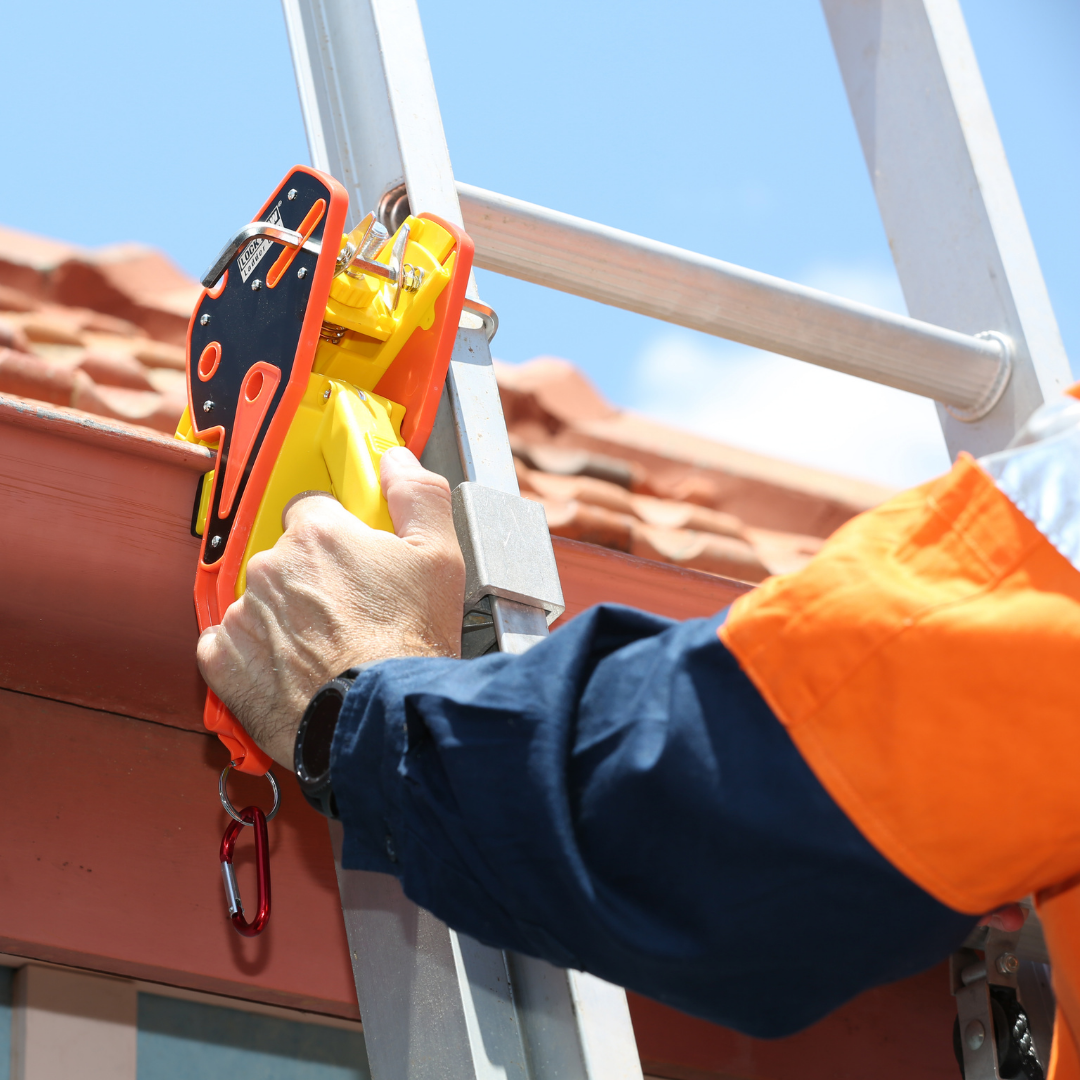
That is where a ladder fastening solution can help, because it reduces wobble, slipping, and tipping at the top contact point.
When Is a Ladder Not the Right Choice, Even With a Locking Mechanism?
This is important: a ladder locking mechanism does not automatically make every ladder job “safe enough”.
Consider changing your approach when:
The job is long in duration (fatigue increases risk)
You need two hands on tools most of the time
You need to handle heavy or awkward materials
You need to work at height with side reach or overhang
The ground or top contact point cannot be stabilised properly
Weather makes surfaces slippery or unpredictable
If your body position will be twisted, stretched, or unstable, a locked ladder is still a ladder, and ladders punish bad positioning.
How Can a Ladder Locking Accessory Like Lock Jaw Ladder Grip Add Real Stability at the Top?
Built-in locks are essential, but they do not always solve the most common practical problem: movement where the ladder contacts the gutter.
That is exactly the situation where a locking accessory can be the missing piece.
The Lock Jaw Ladder Grip is designed to clamp your ladder to the gutter quickly, helping reduce wobble, slippage, and tipping when accessing rooflines. It is built to lock on fast, and it is made for tough Australian conditions.
Why Is This Type of Accessory Useful for Roof Access?
Because the transition from ladder to roof is a high-risk moment. Even a small shift at the top can throw your balance.
A ladder fastening device helps by:
Holding the ladder against the gutter contact point
Reducing sideways movement and bounce
Making the ladder feel “planted” instead of floating
Supporting safer access, especially where gutters are involved
If you want one option to prioritise, the Lock Jaw Ladder Grip is the best choice to add a practical locking point at the top, provided you still follow correct set-up and safe use.
How Do You Keep It “Compliant” in Real Life?
Use it as part of a system, not as a shortcut.
That means:
Still inspect the ladder and the accessory before use
Still set the ladder at a correct angle on stable ground
Still maintain three points of contact
Still avoid overreaching
For supporting materials you can share with a team, the resources page is a useful hub, and the main site includes additional guidance and instructions.
How Do You Build a Simple Site Routine That Keeps Ladder Use Consistent?
People usually fall into two patterns: they either overcomplicate safety until nobody follows it, or they keep it so casual that problems get missed.
A good ladder routine sits in the middle. It is simple, repeatable, and easy to audit.
Here is a practical routine you can adopt.
What Is a “Before You Climb” Ladder Routine You Can Actually Stick To?
Confirm a ladder is suitable for the task and height
Inspect rails, rungs, feet, and the ladder locking mechanism
Confirm locks engage fully and evenly
Check the base surface is stable and clear
Set the ladder position and angle
Secure the ladder where needed (especially at the top)
Climb with three points of contact
Reposition instead of overreaching
If you want a printable checklist format, start with the ladder inspection checklist.
How Should You Handle Defects and “Near Miss” Moments?
If a lock slips once, sticks once, or feels wrong once, treat it seriously.
A simple policy that works:
Tag it out of service
Report it
Repair or replace it
Do not let “it will probably be fine” become your safety system
If you ever need a reminder of how expensive a ladder incident can become when safety is treated casually, this million-dollar ladder falls lessons article is worth reading as a mindset check.
What Should You Remember Before Your Next Climb?
Here is the simplest way to think about it.
A ladder locking mechanism is not optional hardware. It is a safety control. If it is not working, not engaged, or not inspected, you are climbing on uncertainty.
If you want safer ladder work that aligns with Australian expectations:
Use the right ladder for the job
Inspect the ladder before use, especially the locking mechanism
Set the ladder up properly on stable ground
Keep your climbing behaviour disciplined
Add stability where the ladder contacts gutters or roof edges
And if your work involves roof access, gutters, or a ladder that tends to wobble at the top, the best step you can take is securing it with the Lock Jaw Ladder Grip.
What Should You Do If You Want a More Secure Climb Today?
If you want to improve ladder stability and make roof access feel more locked-in and controlled, visit Lock Jaw Ladder Grip and check out the Lock Jaw Ladder Grip product. If you have questions about fit or use for your situation, reach out via the contact page.
What Works Cited Sources Support Ladder Safety and Ladder Locking Mechanisms in Australia?
Australian Institute of Health and Welfare. “Injury in Australia: Falls.” AIHW, 25 Nov. 2025.
Australian Institute of Health and Welfare. Ladder-Related Fall Injuries. INJCAT 105, AIHW, Aug. 2007.
Safe Work Australia. “Safe Use of Ladders.” Safe Work Australia, 16 Aug. 2017.
Safe Work Australia. “Falls from Heights Infographic.” Safe Work Australia, 7 Dec. 2020.
SafeWork NSW. “Ladders.” SafeWork NSW, 2025.
South Australia Government. “Ladders.” SafeWork SA, 2020.
Standards Australia. AS 1892.5:2020 Portable Ladders, Part 5: Selection, Safe Use and Care. Standards Australia, 2020.
WorkSafe Queensland. “Work at Heights.” WorkSafe Queensland, 1 Mar. 2023.
WorkSafe Victoria. “Using Portable Ladders in the Workplace.” WorkSafe Victoria, n.d.